
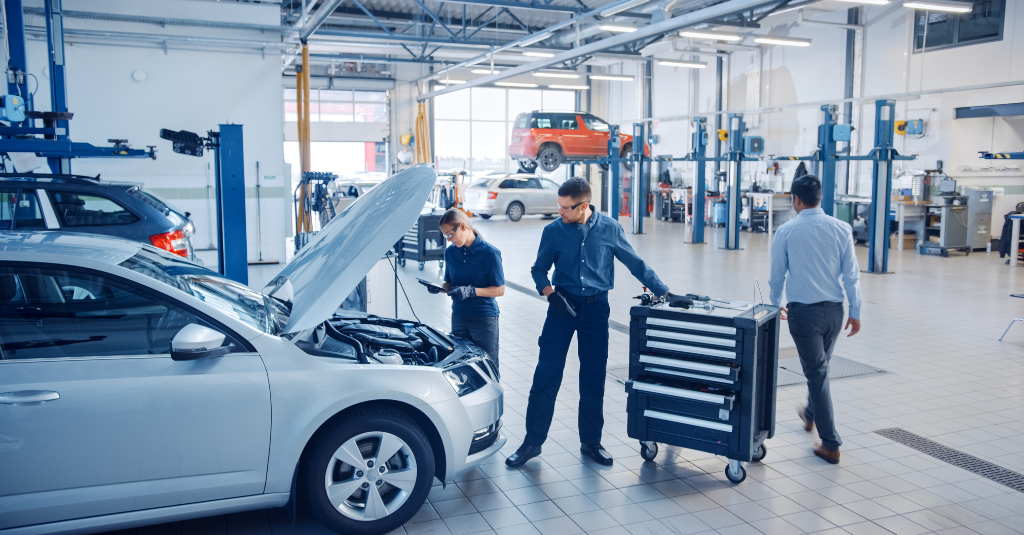

For decades, franchised car dealerships held a firm grip on the automotive service industry. When consumers bought a new or certified pre-owned vehicle, returning to the dealership for routine maintenance and major repairs was long considered the standard protocol. Drivers often believed that only factory-affiliated service centers possessed the specialized knowledge, proprietary tools, and original equipment parts necessary to keep their cars running safely.
Today, that traditional dynamic has shifted dramatically. Independent auto repair shops have steadily eroded the market dominance of franchise service departments. By combining lower labor rates, personalized customer service, advanced diagnostic technology, and flexible repair options, local independent garages are winning over millions of car owners. As vehicle ownership costs rise and consumer expectations evolve, the aftermarket auto repair sector continues to present formidable competition to dealership service networks.
Significant Cost Savings for Vehicle Owners
The primary driver behind the migration from dealership service bays to independent shops is overall affordability. Operating a franchise dealership involves massive overhead expenses, including multi-acre real estate leases, expansive glass showrooms, large administrative staff, and mandatory corporate branding updates imposed by auto manufacturers. These substantial fixed costs are routinely passed along to service customers through elevated hourly labor rates and higher part markups.
Independent repair facilities operate on far leaner business models, allowing them to offer transparent pricing that appeals directly to budget-conscious drivers.
-
Competitive Labor Rates: Labor fees at franchised dealerships can be substantially higher per hour than those charged by local independent facilities for identical maintenance tasks.
-
Flexible Parts Selection: Dealerships exclusively install Original Equipment Manufacturer (OEM) components, which carry premium price tags. Independent shops offer customers a choice between high-grade aftermarket parts, remanufactured alternatives, or factory OEM components, providing flexibility based on vehicle age and customer budget.
-
No Unnecessary Corporate Service Bundles: Dealership service advisors often push pre-packaged, high-cost maintenance schedules. Independent mechanics typically focus on specific items that actually show physical wear or require immediate attention.
Over the lifetime of a vehicle, choosing an independent shop for routine maintenance can save drivers thousands of dollars without compromising quality or safety.
Access to Advanced Diagnostic Technology and Certified Technicians
Historically, dealerships maintained a technological edge because modern vehicles are essentially complex computers on wheels. Access to factory service bulletins, specialized software updates, and proprietary diagnostic scanners was tightly controlled by automobile manufacturers.
However, Right to Repair legislation and industry developments have leveled the playing field. Independent mechanics now have access to factory-level diagnostic software, detailed service documentation, and state-of-the-art scan tools capable of communicating with complex electronic control units across virtually every vehicle make and model.
Highly Qualified Master Technicians
The skill gap between dealership mechanics and independent technicians has effectively closed. Many seasoned technicians working at independent garages previously spent years gaining factory training and experience at franchise dealerships before moving to local shops or opening their own businesses. Furthermore, independent mechanics frequently earn certifications from the National Institute for Automotive Service Excellence (ASE), demonstrating rigorous technical competence across multiple vehicle systems.
Multi-Brand Expertise
While dealership technicians specialize strictly in a single vehicle brand, independent mechanics diagnose and service a diverse range of domestic, Asian, and European vehicles daily. This broader experience gives independent technicians a holistic understanding of common mechanical patterns, enabling efficient troubleshooting when complex electrical or mechanical faults occur.
Personalized Customer Relationships and Communication
One of the most notable drawbacks of servicing a vehicle at a large dealership is the impersonal nature of the transaction. Customers interact exclusively with service advisors who act as commissioned sales intermediaries, rarely meeting or speaking directly with the technician performing the work on their car.
Independent repair shops excel at cultivating direct, personal relationships with their clientele. In a local neighborhood garage, vehicle owners frequently speak directly with the business owner or the lead technician assigned to their vehicle.
-
Direct Technician Communication: Drivers can explain subtle noises or driving issues directly to the person turning the wrenches, leading to more accurate diagnoses.
-
Long-Term Trust and Familiarity: Local shops build customer loyalty by tracking a specific vehicle service history over many years, offering tailored advice rather than high-pressure upselling.
-
Customized Service Plans: Independent shop owners can accommodate special requests, prioritize urgent repairs over secondary recommendations, and tailor maintenance plans to match individual driving habits.
This level of transparency fosters long-term trust, turning routine car care into a collaborative relationship rather than an adversarial transaction.
Convenience, Accessibility, and Community Roots
Location and convenience play a major role in how consumers choose service providers. Franchise dealerships are typically situated along major highway corridors or sprawling auto malls far removed from residential neighborhoods or suburban town centers. Dropping off a vehicle for an oil change or brake inspection at a remote dealership often requires coordinating rides, booking rental cars, or spending hours in a corporate lounge.
In contrast, independent auto repair facilities are situated directly within local communities. Their proximity to residential areas and commercial centers allows customers to walk home, utilize quick local shuttle options, or drop off vehicles on their way to work.
Additionally, local independent shops are embedded in the communities they serve. Supporting a local garage keeps financial resources circulating within the neighborhood, supporting local jobs and small business growth rather than funneling revenue to corporate conglomerate headquarters.
Debunking the Magnuson-Moss Warranty Protection Myth
For many years, car buyers believed that taking a new vehicle to an independent repair shop for routine maintenance would automatically void the manufacturer factory warranty. Dealership sales teams historically leaned on this misconception to retain service customers during the initial years of vehicle ownership.
Under federal law—specifically the Magnuson-Moss Warranty Act—automobile manufacturers cannot require vehicle owners to use dealer service facilities or proprietary parts to maintain factory warranty coverage. As long as routine maintenance tasks like oil changes, fluid flushes, filter replacements, and brake service are performed at recommended mileage intervals and supported by clear receipts, the manufacturer warranty remains fully valid.
Independent repair shops routinely provide detailed, itemized service records that preserve vehicle warranty coverage, empowering new car buyers to choose where their vehicles are serviced from day one.
Adaptability to Evolving Automotive Trends
As the automotive landscape transitions toward hybrid powertrains, fully electric vehicles (EVs), and advanced driver-assistance systems (ADAS), independent repair facilities are adapting rapidly. Top-tier independent shops invest continuously in specialized high-voltage safety equipment, wheel alignment systems integrated with ADAS sensor calibration capabilities, and specialized technician training programs.
By pairing modern technical capabilities with traditional local customer care, independent auto repair facilities have firmly established themselves as formidable, highly reliable alternatives to traditional franchise car dealerships.
Frequently Asked Questions (FAQ)
Will servicing my vehicle at an independent shop void my factory warranty?
No, servicing your car at an independent auto repair facility will not void your factory warranty. Under the federal Magnuson-Moss Warranty Act, vehicle owners are legally permitted to have routine maintenance performed by any qualified service provider or do it themselves without invalidating warranty coverage. You simply need to keep clear receipts and documented records showing that services were performed according to manufacturer guidelines.
Are replacement parts used by independent shops as durable as dealership parts?
Yes, independent shops frequently use high-quality parts that meet or exceed factory specifications. They often source components directly from original equipment suppliers that manufacture the parts originally installed on the vehicle at the factory. Additionally, independent shops give customers the option to select premium aftermarket parts, which can offer equivalent durability at a lower cost.
How can I verify that an independent repair shop is qualified to work on my specific car model?
Look for certifications from reputable industry organizations such as the National Institute for Automotive Service Excellence (ASE) or AAA Approved Auto Repair designations. You can also ask the shop manager directly about their experience with your specific vehicle make, inquire about their diagnostic equipment, and read verified customer reviews online.
Why are dealership labor rates generally higher than independent repair shop rates?
Dealership labor rates are typically higher due to extensive facility overhead, expensive commercial real estate, corporate marketing mandates, and administrative staffing structures. Independent shops operate with leaner administrative frameworks and lower operational overhead, allowing them to pass those savings directly onto the customer through lower hourly rates.
What should I do if a dealership claims a repair must be done at their facility?
Ask the dealership representative to provide that requirement in writing, along with references to the specific terms of your warranty agreement. Unless the manufacturer provides the service and parts completely free of charge under a recall or factory warranty repair, federal law prohibits manufacturers from forcing you to use specific dealership service centers.
Can independent repair shops handle complex computer diagnostics and software updates?
Yes, reputable independent repair facilities invest in professional-grade diagnostic equipment, subscription-based factory service databases, and advanced scan tools. These systems allow technicians to read trouble codes, reflash vehicle modules, perform system resets, and troubleshoot complex electronic and software issues on modern vehicles.
Do independent auto repair facilities offer warranties on their work?
Yes, most professional independent auto repair shops provide warranty coverage on both parts and labor. Many independent facilities participate in nationwide warranty networks that cover their repair work for 12 to 36 months or 12,000 to 36,000 miles, giving customers peace of mind even when traveling far from home.

Comments are closed.